France on a Budget: Top Tips, Hidden Deals, and Money-Saving Secrets
Author:sana
France has a reputation as one of Europe's most expensive destinations. Between Parisian hotel rates, Michelin-starred dining, and Riviera beach clubs, it's easy to assume the country is off-limits for budget travelers. But with smart planning and a few local tricks, you can experience the best of France—croissants, châteaux, champagne, and all—without emptying your savings account.
What You'll Likely Spend Per Day In France
Let's start with the numbers. A backpacker traveling on a tight budget can get by on approximately €92 per day across France. For a more comfortable mid-range experience—private rooms in budget hotels, occasional bistro meals, and a few paid attractions—budget around €190 per day. For two people sharing costs, this translates to roughly €380 per day. A solo traveler on a tighter budget can aim for €92–110 per day with careful planning.
Here's a breakdown:
Budget hotel double room: €60–€90
Chambre d'hôtes (B&B): €50–€150
Croissant: €1.20–€2
Baguette sandwich: €3–€6
Plat du jour (daily special): €10–€15
Set lunch menu: around €20–€25
Café coffee: €2–€4
Glass of house wine: €4–€6
Public transport single ticket (Paris metro): €2.55
City museum entry: €10–€20
When And Where To Arrive For Maximum Savings
Timing Matters
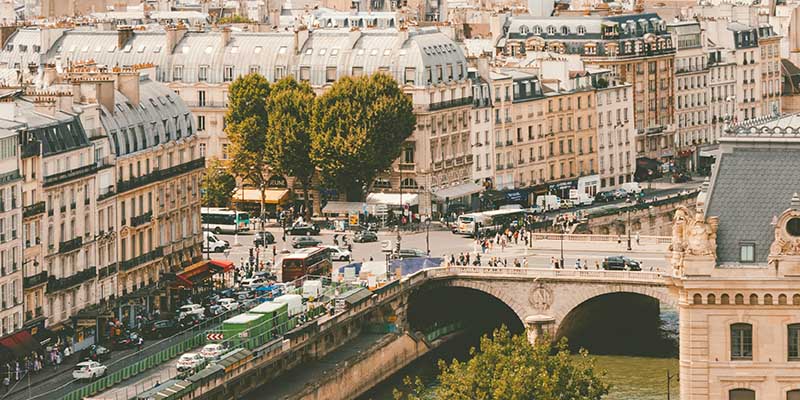
July and August are peak season—prices for flights and hotels skyrocket, and crowds make everything slower. Instead, aim for the shoulder seasons: May through June or September through October.
A 2026 industry report emphasizes that "if you are not bound by school holidays, the best time is in June or September, prices are generally lower regarding accommodation, travel as well as on-site tourist attractions". For the absolute lowest prices (though chillier weather), visit between late November and March, excluding the Christmas holidays. February remains the most affordable month.
Book Flights Smartly
Departing on a Tuesday or Wednesday rather than a weekend can save you significant money. Booking approximately one to four months before departure tends to yield the best fares. For transatlantic travelers, round-trip flights to Paris from the US East Coast range between $450 and $700 for economy; from the West Coast, expect 650–950.
Skip Charles De Gaulle
France's largest airport (CDG) often charges a premium. Consider flying into Paris-Orly instead, or choose a regional airport like Marseille, Nice, Lyon, or Bordeaux. These are well-connected to discount carriers and often cheaper to fly into, especially if your itinerary stays outside Paris.
Compare booking platforms for flights and connections. Use the following tools to find the best combination of flights, trains, and buses for your route:
- Omio – https://www.omio.com
- Rome2Rio – https://www.rome2rio.com
- Skyscanner – https://www.skyscanner.net
- Kayak – https://www.kayak.com
Getting Around France Without Overspending
Master Sncf's Discount Tickets
France's national rail company has announced that TGV fares will increase by an average of only 1% in 2026, below the projected inflation rate of 1.3%. More importantly, SNCF aims to sell over 50 million INOUI and OUIGO TGV tickets for less than €30 in 2026, with 1 in 2 leisure tickets priced under €45.
For travelers under 27, the Carte Avantage Jeune costs €49 for one year and saves up to 30% on every train ticket. The Carte Avantage Senior (ages 60+) offers the same discount structure at the same price. SNCF's official site notes that the card "pays for itself from the third journey"—a remarkably low break-even point for occasional travelers.
Key rail and bus booking services:
SNCF Connect (official trains) – https://www.sncf-connect.com
OUIGO (low-cost TGV) – https://www.ouigo.com
FlixBus (budget buses) – https://www.flixbus.fr
BlaBlaCar Bus (competitor to FlixBus) – https://www.blablacar.fr
Use Carpooling And Ridesharing
BlaBlaCar is a French carpooling app used by millions. Drivers list empty seats for trips between cities, and you pay a small share of fuel costs—often €10–25 per hour of travel. The app includes verified profiles and safety features.
For travelers without a train ticket, access starts at €9.99, making it a viable alternative for last-minute travel when train fares are high.
BlaBlaCar (ridesharing) – https://www.blablacar.fr
Stay Connected Without Roaming Fees
Purchase an eSIM before you arrive to avoid costly roaming fees. Options allow instant activation and help you compare data prices, keeping you connected for maps, translations, and bookings without hassle.
Nomad eSIM – https://www.nomadesim.com/france-eSIM
Airalo – https://www.airalo.com
City Transport Hacks
In Paris, the monthly Navigo travel pass has increased from €88.80 in 2025 to €90.80 in 2026, while the weekly Navigo pass (all zones) now costs €32.40. A single metro ticket (without a pass) is now €2.55.
For occasional users, consider the Navigo Liberté+ system, which charges €2.04 per metro ride and €1.64 per bus/tram ride, billed monthly after your trips.
Many cities offer bike-sharing: Paris's Vélib' Métropole system has over 17,000 bikes, with monthly passes starting from €3.10 for casual users. And remember—central Paris is highly walkable; simply exploring on foot saves transport costs entirely.
Where To Sleep: Affordable Accommodation Strategies
Beyond Hotels
The cheapest sleeps in France are often not hotels at all. Hostels (auberges de jeunesse) offer dorm beds from €30–€50 per night. Many now feature private rooms, family spaces, and kitchens to prepare your own meals.
Chambres d'Hôte
These French B&Bs offer the best value for couples or small groups: double rooms for €50–€150 often include a homemade breakfast featuring fresh baguettes, local jam, and strong coffee—a meal that would cost €15–20 per person in a café.
Self-Catering Apartments
For families or groups of four or more, renting an apartment almost always beats booking multiple hotel rooms. As of early 2026, the average nightly rate for an Airbnb listing across France is approximately €130, with the median around €105. Major cities like Paris command higher rates (€220+ average), but regional cities and rural areas offer exceptional value.
Stay Outside The Center
Medium-sized French towns use concentric parking zones with cheaper rates farther out. The same logic applies to accommodation—staying 15 minutes outside city centers often costs 30–50% less, and free shuttles (navettes) connect to central areas.
Camping
France has thousands of campgrounds, from simple municipal sites to glamping options. Prices start as low as €10–15 per night for a tent pitch, and many offer mobile homes or chalets for rent.
Accommodation booking platforms to compare:
Hostelworld – https://www.hostelworld.com
Booking.com – https://www.booking.com
Gîtes de France (official B&Bs and cottages) – https://www.gites-de-france.com
Camping France (official campground directory) – https://www.campingfrance.com
Eating Well Without The Price Tag
- Skip hotel breakfasts.
Hotels routinely charge €12–18 for continental breakfasts you can assemble yourself for €3–5. Walk to the nearest boulangerie for a fresh croissant (€1.20–€2) and pain au chocolat. Many now sell coffee too.
- Eat your main meal at lunch.
The prix fixe lunch menu (entrée + plat + dessert) is the best value in French dining. Even Michelin-starred restaurants offer lunch menus for €30–50, compared to €100+ for dinner service.
- Scan for plats du jour.
Bistros display their daily special on a chalkboard—a complete main course for €10–15. Look for "formule" (two courses) or "menu" (three courses). For around €3.30, university restaurants (restos universitaires) serve three-course meals to anyone with a student ID.
- Shop at markets.
French street markets are picnickers' paradises. Buy a baguette for €1, local cheese for €3–5, pâté or charcuterie for €4–6. Add seasonal fruit and a €3–5 bottle of wine from a supermarket, and you've got a feast for two for under €20.
- Use supermarket loyalty cards.
Chains like Carrefour, Intermarché, Leclerc, and Super U offer digital coupons and loyalty programs that unlock discounts. Discount supermarkets Lidl and Aldi have been aggressively expanding their market share across Europe, with France being no exception, making them excellent choices for budget grocery shopping. Look for "anti-waste" sections near closing time, where soon-to-expire items are marked down 30–50%.
- Street food is your friend.
Try socca (chickpea pancake) in Nice for €3, crêpes from street stands for €2–4, pan bagnat (tuna sandwich) for €5, or croque monsieur for €4–6.
Culture And Activities On a Shoestring
Free museums exist. Many City of Paris museums—including the Musée Carnavalet (history of Paris), Maison de Victor Hugo, Petit Palais (fine arts museum), and Musée de la Vie Romantique—offer free entry to their permanent collections year-round for all visitors.
First Sunday free admission. Most national museums and monuments in France offer free entry to their permanent collections on the first Sunday of each month. This policy remains in effect for 2026. However, note an important exception: the Louvre shifted its free admission to the first Friday of the month after 6 PM (except during summer) instead of the first Sunday.
The “Under 26” golden ticket. If you are under 26 years old and a resident of the European Union (including international students with a valid long-stay visa or student ID), admission to all national museums—including the Louvre, Musée d'Orsay, Centre Pompidou, Arc de Triomphe, and Panthéon—is free.
City passes save money. Most French cities offer bundled passes covering museums, transport, and attractions. The Paris Museum Pass (covering over 50 museums and monuments) is available in 2-day, 4-day, and 6-day options, with 2-day passes starting around €62 (subject to seasonal adjustments). Always check local tourist office websites before buying individual tickets.
Official city pass links:
Paris Museum Pass – https://www.parismuseumpass.fr
Lyon City Card – https://www.lyon-france.com
Marseille City Pass – https://www.marseille-tourisme.com
Explore for free. So much of France's magic costs nothing: wandering medieval village lanes, sitting in cathedral squares, hiking coastal trails, exploring public parks and gardens like the Tuileries or Luxembourg, people-watching in cafés (where one drink buys hours of table time).
Free walking tours. Many cities offer tip-based walking tours starting from €0. Guides share local history and hidden gems—just tip what you can afford. Check these platforms:
Guruwalk – Https://Www.Guruwalk.Com
Free Tour – Https://Www.Freetour.Com
Smart Spending On Wine And Essentials
- Buy wine directly.
Skip restaurant markups. Visit a producteur (wine producer) or vigneron (winegrower) for tastings—often free with no purchase required. Even Burgundy wines cost a fraction of export prices when bought locally. Supermarkets offer excellent table wines for €3–6.
- Fill your own container (en vrac).
At local wine cooperatives (every wine-producing village has one), spend €2–4 per liter to fill reusable bottles. The quality often exceeds expectations.
- Shop at discount supermarkets.
Lidl and Aldi operate throughout France with prices significantly lower than traditional chains, and their aggressive pricing strategies make them prime destinations for budget-conscious travelers.
A 3-Day Budget Paris Itinerary
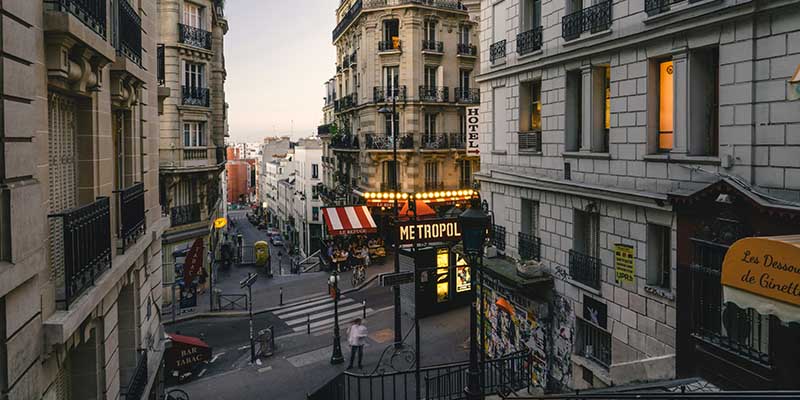
Let's test this with a practical example. For approximately €550–600 over three days (about €183–200 per day), you can comfortably explore Paris in 2026:
Accommodation: €70–100 per night (budget hotel or hostel private room)
Food: €35–45 per day (boulangerie breakfast, picnic lunch, bistro set-menu dinner)
Transport: €32.40 for a weekly Navigo pass (or use single tickets at €2.55 per ride)
Activities: Mix free attractions (Notre-Dame exterior, Montmartre wandering, Luxembourg Gardens, free museums) with one paid museum entry (or use a free admission on Sunday/Friday)
One splurge: Seine River cruise or a lunch menu at a classic Parisian bistro
From The Alps To The Riviera: France Rewards Smart Planning
France doesn't have to be a dream you put off until you're rich. The croissant tastes just as good eaten on a park bench as in a hotel dining room. The wine costs €4 a bottle from a market, not €15 a glass at a tourist café. And the memories of strolling through lavender fields or gazing up at Gothic cathedral spires? Those are entirely free.
Whether you're backpacking along the Côte d'Azur, cycling through the Loire Valley, or sipping espresso in a Lyon bouchon, every euro saved on logistics is a euro you can spend on experiences that truly matter. Plan ahead, travel like a local, and France will welcome you—wallet intact.
Latest News
Why Slow Travel Is Becoming the Biggest Travel Trend of 2026
March 13, 2026

Hidden Benefits Of Traditional Thai Massage You Didn't Know
October 27, 2025

How To Travel To Iceland Without Spending A Fortune
September 27, 2025
12 Best Solo Travel Destinations For 2026 (Plus Safety Tips)
September 18, 2025
Lost, Delayed, Or Stolen Luggage? Don’t Panic—Follow These Steps
September 14, 2025

The Best Time to Book Flights for Maximum Savings (Backed by Real Data)
September 7, 2025