Atrani, Italy Travel Guide: Where to Stay, What to See, and When to Visit
Author:sana
Atrani is tiny. Officially the smallest municipality in Italy, covering just 0.2 square kilometers. You could walk every alley and stairway in a morning. But that smallness is exactly what makes it special.
Tucked between two mountains on the Amalfi Coast, the town sits in the valley of the Dragone river. Legend says a fire breathing dragon lives there, which is how the river got its name. Atrani has kept its medieval character intact while the rest of the coast went glossy. Think original archways, hidden courtyards, and those little staircases called scalinatelle. The place looks like a Neapolitan nativity scene that decided to come alive.
Best Time to Visit (And When You Might Want to Avoid)
Late spring and early fall are your best bets: April to June or September to October. The weather is mild, the crowds are smaller, and you will not be fighting for space on the beach. Tourist season usually starts around Easter, then gets chaotic by mid July.
August is the worst time to visit. The Amalfi Coast gets packed, prices spike, and the crowds can be exhausting. Atrani avoids some of the overtourism simply because there is not much space, but low season is still a far better experience.
If you plan to stay overnight, book early. Accommodation is limited, especially in summer. For a quieter trip, visit midweek during shoulder season. Early mornings from 7 to 9 AM are especially beautiful, with soft light and empty streets. Late afternoon is another great time, when locals gather in the tiny piazza.
How to Get There (Without the Headache)
The easiest way? Walk from Amalfi. It takes less than 15 minutes on foot. There is a pedestrian tunnel that connects the two towns, so you do not even have to deal with traffic. By car or bus, it is just a couple of minutes if there is no traffic. But "no traffic" on the Amalfi Coast is basically a myth from June to September.
By bus
The SITA Sud public buses run along the coast. A ticket from Amalfi to Atrani costs about 1 to 2 and the journey takes around 5 minutes. Sita Sud operates this route every 4 hours. You must buy tickets before boarding at tobacconists, bars, or newsstands.
During high season, expect long queues. Do not count on getting a seat. Midweek travel helps a bit, but not much. The COSTIERASITA day pass costs €10 and works on local buses in the area.
By taxi
White cabs are around. Ask for an estimate before you get in. The fare might be way more than you think.
By car
Think very hard about this. Parking is a nightmare—little space, heavily restricted. The large Luna Rossa parking garage is carved directly into the cliff face between Atrani and Amalfi, with a tunnel leading to both towns. It costs €3 per hour. In Atrani itself, there is paid street parking near the beach with blue-painted lines, at about €2.50 per hour.
Non-residents' cars often face alternate-day restrictions based on license plate numbers on the SS163 road. There is an app called KCity that shows real-time parking availability. Driving is not recommended unless you enjoy stress.
On foot from Ravello
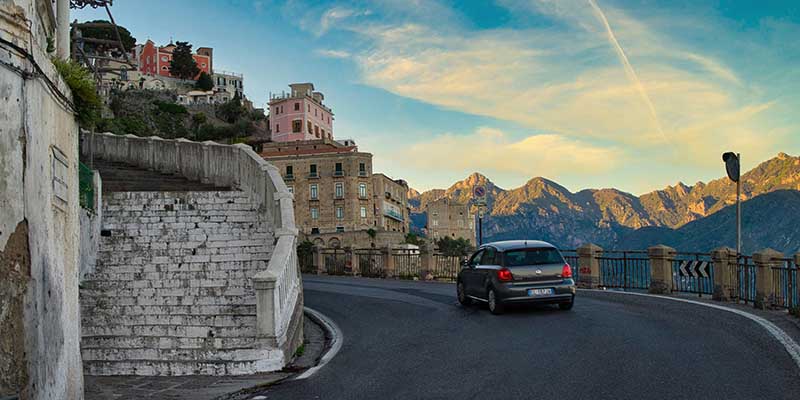
This is lovely. If you have an hour and a half, hike down from Ravello starting near the church of Santa Maria del Gradillo.
You will walk through lemon groves, ancient stairways, and killer views. You will pass Atrani's cemetery and the church of San Michele Fuori Le Mura before spilling out into the main square, Piazzetta Umberto I. One of those walks that makes you feel like you earned your lunch.
By ferry
This is a great option if you are coming from Salerno or other coastal towns. Travelmar operates ferries from Salerno to Amalfi hourly during season. The journey takes about 35 minutes and costs 10 to 17. From Amalfi, it is then a short walk to Atrani. There are about 163 sailings per week, 36 per day on average. The fastest ferries cover the 14 km distance in 15 to 33 minutes, depending on the operator.
Tickets start from as low as £5 if booked in advance, averaging around £9 on the day. Ferries to other towns like Positano and Capri are also available from Amalfi.
By train
No train stations close to Atrani. The closest station is Salerno or Naples. From there, take a bus or ferry. A regional train from Naples to Salerno costs around €10 to €15 and takes about 40 minutes.
Getting Around Once You Are There
You will not need wheels. Everything is walkable. The town is so compact that getting lost is almost impossible. And even if you do, who cares? That is half the fun. Wander without a map. Let the staircases take you where they want.
You will stumble into thousand-year-old churches like Santa Maria Maddalena or San Salvatore de Birecto without even trying. The church of San Salvatore de' Bireto overlooks the main square and was first built around the year 1000. It was here that the Doges of the Maritime Republic of Amalfi received their investiture.
Travelers with mobility issues might want to stick near the main piazza or seafront. Those little stairways are charming, but they are everywhere and they add up fast.
Best Things To Do in Atrani
1. Just walk around. No agenda.
No checklist needed. The town's architecture still whispers about its glorious past, back when it rivaled Amalfi as a maritime power. You will see it in the old arches, the way buildings hug the cliffs, the hidden corners where time seems to have stopped.
Bring a camera, but also just look. Walk through narrow alleyways and courtyards protected by arches, along the ups and downs of steps that all converge on the sea. Stop at Piazza Umberto I, better known as the piazzetta, and sit down for an espresso. This square was originally created as a mooring for boats on stormy days.
2. Spend time on that tiny sandy beach
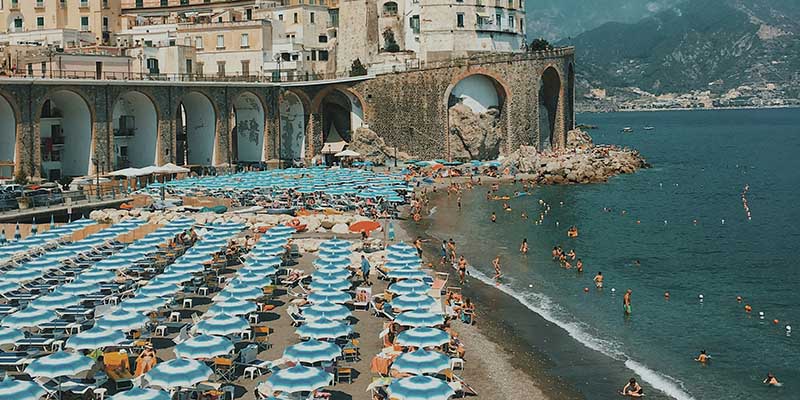
The beach stretches for about 130 meters and offers fine sand mixed with a bit of fine gravel. Sheltered by a rocky reef, the waters are shallow and calm, perfect for children. The beach is partly free and partly with bathing facilities, divided in half by the Dragone river. The free section is open to everyone; no reservation needed. The lido section charges for sun beds and umbrellas.
Prices vary by season, but expect to pay around €30 to €35 for two chairs and an umbrella. The beach is open year-round, 24/7, and entry to the free area costs nothing.
A pro tip: come back at dusk. That is when you might see lampare, fishing boats with tiny lamps, sailing out into the dark. It looks like something from a painting. If you cannot snag a beach spot but still want to swim, rent a small boat or join a tour. The coastline from the water is a whole different kind of magic.
3. Eat the local seafood (and one very weird pumpkin dish)
Scialatielli ai frutti di mare, a short, thick pasta loaded with fresh seafood, is a must. Find a beachfront restaurant, order that, and just watch the waves. You will taste the salt in the air and in your bowl.
At local spots like Le Palme, pizzas are priced around €10 to €13, while main courses fall in the €20 to €30 range. Le Arcate has prices about 10% lower than comparable spots in Amalfi, though there is still a €2 cover charge per person. 'A Paranza offers a prix fixe seafood menu at about €45 per person, which includes multiple courses.
For something more budget-friendly, local trattoria Da Emilia serves authentic lunch for €8 to €12. The public beach is free with crystal clear water.
Now for the real unique thing. Sarchiapone is Atrani's signature dish, and locals go all out for it on July 22, their Patron Saint's day for Santa Maria Maddalena. It is a long, green pumpkin grown on the hills around the coast.
You hollow it out, cook the flesh with onion and minced meat, then stuff it back inside with ricotta, mozzarella, salami, hard boiled egg, parmesan, and ham.
Every family does it a little differently. Some versions fry the stuffed pumpkin, others bake it. If you are not there on July 22, ask around. Some places might offer private cooking classes. And do not skip dessert. The people of Campania claim the best pasticciotto comes from Atrani, a crumbly pastry filled with custard and sour cherries.
4. Take a boat out or join a tour
Atrani's waters are clear as glass on a good day. Renting a small boat gives you access to hidden coves and grottos that you cannot reach from land.
Atrani B Service offers boat rentals, kayak and paddle rentals, water cab services, and has a mooring field with buoys for up to 12 boats up to 16 meters in length. Several local operators offer excursions along the Amalfi Coast to Capri, Positano, Pompeii, and Naples. Some also arrange diving trips, cooking classes, pizza lessons, and trekking.
A full day boat rental without a license typically runs €400 to €470 for eight hours depending on the season. Kayak rentals are usually cheaper, though specific hourly rates are best obtained directly from local operators.
Alternatively, hop on a ferry from Atrani to Positano or Capri. From Amalfi, you can catch ferries to Positano, Capri, Salerno, and other coastal towns with frequent daily departures during summer.
5. Walk to Amalfi (or further)
That 15 minute walk to Amalfi is almost too easy. Once you are there, Amalfi's cathedral, Duomo di Sant'Andrea, is worth seeing. Those Arab Norman stripes, the crypt, the whole thing. From Amalfi, you can also catch a ferry to Positano, Capri, or Salerno.
Ferries are surprisingly efficient and way less of a headache than the bus. The ferry from Salerno to Amalfi takes about 35 minutes and costs 10 to 17. If you want a more active day, hike the ancient stone steps from Atrani up to Ravello for dramatic arrival photos.
6. Visit the churches
Atrani has a surprising number of churches for such a small town. Visit the Santa Maria Maddalena Collegiate church, the churches of San Salvatore De Birecto, Santa Maria Immacolata, Santa Maria Del Bando, Carmine, and San Michele Fuori Le Mura. Make sure not to miss the Church of the Carmine and the Church of S. Michele Fuori le Mura, among others. Peek inside to admire their paintings and statues.
Budget Check
Let's talk money. "Amalfi Coast" and "cheap" do not usually belong in the same sentence. But Atrani is more affordable than Positano or Amalfi itself.
Accommodation
Holiday rentals in Atrani average about 263 per night.Cheap deals can be found for as low as 263 pernight. Cheap deals can be found for as low as 92 per night, though anything under 255 is considered a good deal. Hotels in Atrani can be found for as low as 255. This is considered a good deal. Hotels in Atranican can be found for as low as 155 per night.
The cheapest day to book a rental is Wednesday at around 128. Tuesday is the most expensive, averaging 378 per night. The most expensive month is December, while November offers the lowest rates. Budget travelers can find hostel dorm beds in nearby Salerno for €30 to €40 per night.
Meals
Beachfront restaurant dinner with seafood and wine: €35 to €50 per person.
A quick pizza or panino: €8 to €12. Gelato: €3 to €5.
Local trattoria lunch: €8 to €12.
A coffee: €1.50 to €2.
Cover charge per person: around €2 at most sit-down restaurants.
Beach
Free section is no cost. Lido section with two chairs and an umbrella: around €30 to €35.
Transport
SITA bus ticket: 1 to 2 per ride.
COSTIERASITA day pass: €10.
Ferry from Salerno to Amalfi: 10 to 17 one way.
Ferry from Atrani to Salerno: tickets start at £2 by bus, around £5 to £9 by ferry.
Regional train Naples to Salerno: €10 to €15.
Parking
Luna Rossa garage: €3 per hour.
Atrani street parking (blue lines): €2.50 per hour. Amalfi port parking: €3 per hour.
Daily average
Budget travelers can get by on €60 to €80 per day staying in nearby hostels and eating local. Mid-range travelers staying in Atrani should budget €150 to €200 per day. Luxury stays can easily exceed €300 per day.
Small Stuff That Saves Trouble
Cash is still king for small purchases. Some beach rentals and smaller cafes do not take cards. Bring euros with you.
The KCity app. Download it if you are driving. Shows real-time parking space availability. Also, check the Luna Rossa garage, which is often the most reliable option.
Ferry schedules change after October. Always check ahead. The last ferries from Salerno to Amalfi typically run until around 23:00 during high season.
Service dogs only on the beach. Leave other pets at home.
If you have limited mobility, stay near Piazzetta Umberto I or the seafront. The upper parts of the town are stairway hell.
August is chaos. It bears repeating. Just do not go in August if you can help it. April through June and September through October are much better.
Book accommodations early especially for summer or holidays. Atrani has limited options.
Bring water shoes if you plan to swim. The beach has sand but some rocky areas.
Visit early morning (7 to 9 AM) for golden light and peaceful streets before the day trippers arrive.
Learn a few Italian phrases. While tourist spots speak English, locals appreciate the effort. Atrani is less touristy than Amalfi, so a little Italian goes a long way.
How a Day in Atrani Might Look
Morning (7 to 10 AM): Arrive early. Walk the quiet streets, take photos in golden light, grab a coffee and cornetto at a local bar. This is the best time to experience Atrani without crowds.
Late morning (10 AM to 1 PM): Visit the churches. Start with Santa Maria Maddalena, then San Salvatore de Birecto. Walk up to San Michele Fuori Le Mura for views over the town.
Lunch (1 to 2:30 PM): Grab a budget lunch at Da Emilia (€8 to €12) or sit down at a beachfront restaurant for seafood pasta.
Afternoon (2:30 to 5 PM): Hit the beach. Either claim a spot in the free section or rent chairs in the lido. Swim, read, nap, watch the boats.
Late afternoon (5 to 7 PM): Walk to Amalfi (15 minutes) or hike up toward Ravello if you have energy. Wander back through the alleyways as the light softens.
Evening (7 to 10 PM): Dinner at a seafood restaurant. Le Palme, Le Arcate, or 'A Paranza are all solid choices. Watch the fishing boats go out at dusk. Have a gelato in the piazzetta.
Overnight (if staying): Atrani after dark is magical. The town quiets down. The lampare lights flicker on the water. Find a bar for a glass of wine and soak it in.
Day Trips From Atrani
Amalfi (15 minutes walk): The duomo, the paper museum, shopping, ferry connections.
Ravello (1.5 hours hike or 30 minutes bus): Villa Rufolo, Villa Cimbrone, gardens, classical concerts.
Positano (30 minutes by ferry or 45 minutes by bus): The iconic colorful cliffside village, shopping, beaches.
Capri (1 hour by ferry from Amalfi): Blue Grotto, chairlift to Monte Solaro, luxury shopping.
Salerno (35 minutes by ferry or 1 hour by bus): Historic center, waterfront promenade, lower prices, train connections to Naples and Rome.
Pompeii (1.5 hours via train from Salerno): The ancient Roman city buried by Vesuvius in 79 AD.
Booking
SITA bus tickets & schedules: www.sitabus.it – Check the Amalfi Coast lines. Tickets must be purchased before boarding at tobacconists, bars, or newsstands.
Amalfi Coast ferry bookings: www.travelmar.it – Runs between Salerno, Amalfi, Positano, and Capri. Ferries from Salerno to Amalfi take about 35 minutes and cost 10 to 17.
Trenitalia train tickets (Naples to Salerno): www.trenitalia.com – Salerno is your closest train hub. Regional trains from Naples to Salerno cost €10 to €15 and take about 40 minutes.
The Lampare at Dusk, the Pumpkin in July
Atrani is not trying to be trendy. It is not pumping out Instagram viewpoints or charging twenty euros for a mediocre cocktail. It is just there. Quietly beautiful. A little bit old fashioned. And if you come at the right time, say a Tuesday in late September, you might feel like you have stumbled into someone's secret. Walk slow. Eat the weird pumpkin thing. Watch the fishermen light their lamps at dusk. Sit in the piazzetta with an espresso and watch the world shuffle by. Sometimes the smallest places leave the biggest impressions.
Latest News

How to Experience a Traditional Ryokan Stay in Japan on a Budget
March 3, 2026
European City Breaks: Best Walkable Cities To Visit In 2026
February 13, 2026

How To Book the Japan Rail Pass Without Overpaying Online
December 2, 2025

Top Tips for Booking Skip-the-Line Tickets Online (and Actually Saving Time & Money)
November 5, 2025

The Best Apps for Finding Last-Minute Hotel Deals
September 29, 2025

10 Smart Tips for Booking Affordable Family-Friendly Tours Without Sacrificing Fun
August 27, 2025